
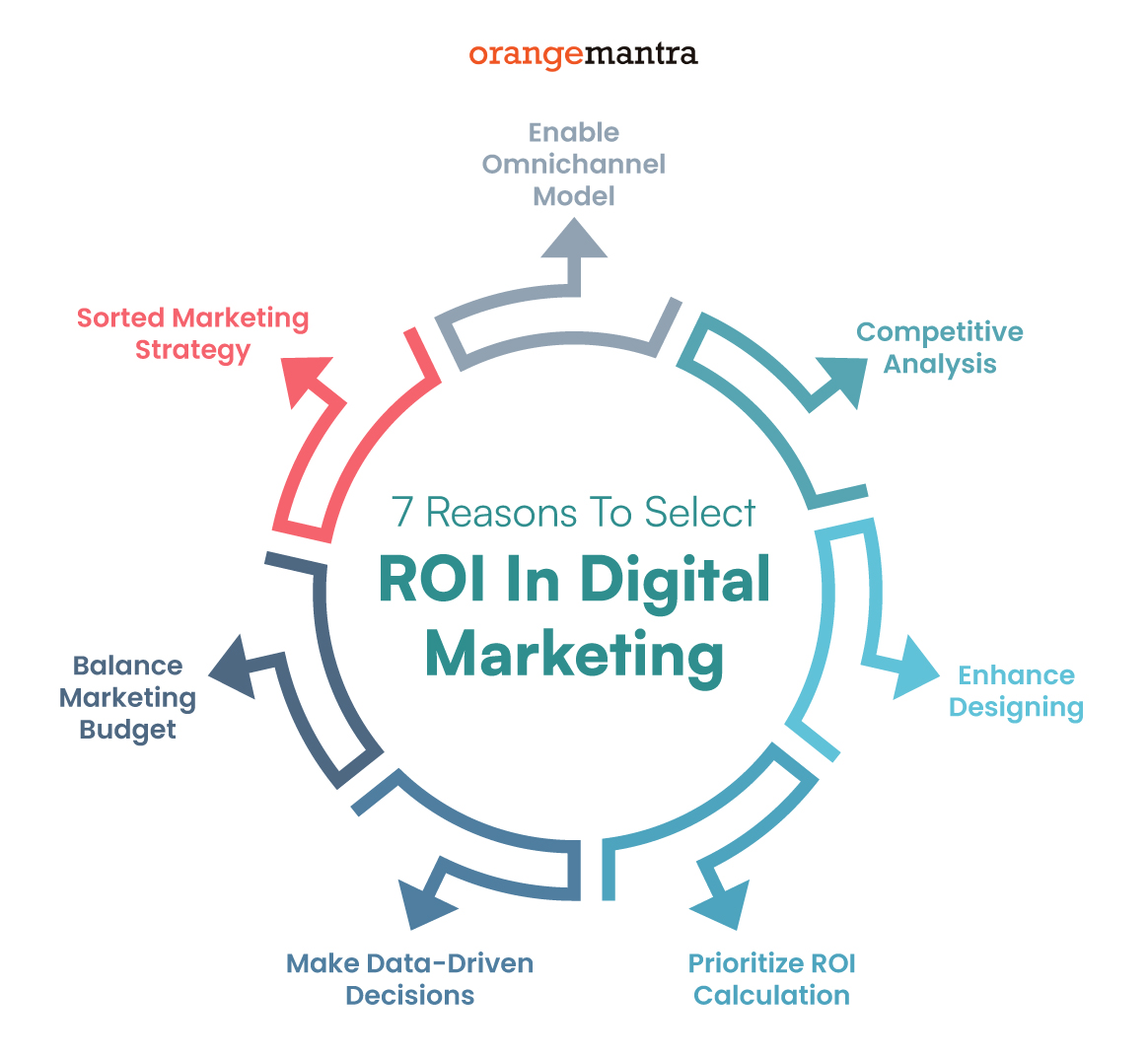
Measuring Your Digital Marketing Return on Investment (ROI)
Investing in digital marketing requires careful consideration. You’re putting resources into campaigns, hoping for a strong return.
This guide will equip you with the knowledge and tools to effectively measure the “online marketing” ROI of your campaigns, ensuring you’re making the most of your marketing budget.
1. Define Clear Objectives:
- Before launching any campaign, define clear, measurable, achievable, relevant, and time-bound (SMART) objectives.
- Are you aiming to increase website traffic, generate leads, boost brand awareness, or drive sales?
- Having specific goals will guide your campaign strategy and make it easier to track your progress.
2. Track Key Performance Indicators (KPIs):
- Website Traffic: Monitor website traffic sources, including organic search, social media, and paid advertising.
- Conversion Rates: Track key conversion metrics, such as website conversions (e.g., contact form submissions, newsletter sign-ups), lead-to-customer conversion rates, and customer lifetime value.
- Engagement Metrics: Monitor social media engagement, such as likes, shares, comments, and mentions.
- Cost per Acquisition (CPA): Calculate the cost of acquiring a new customer through your digital marketing campaigns.
3. Utilize Analytics Tools:
- Leverage tools like Google Analytics to track website traffic, user behavior, and campaign performance.
- Utilize social media analytics platforms to track the performance of your social media campaigns.
- These tools provide valuable data that can be used to optimize your campaigns and improve your ROI.
4. Calculate ROI:
- Calculate your return on investment (ROI) by comparing the revenue generated from your digital marketing campaigns to the total cost of those campaigns.
- ROI = (Revenue Generated – Marketing Costs) / Marketing Costs
- A positive ROI indicates that your campaigns are generating a profit.
5. Continuous Optimization:
- Regularly analyze your campaign data and identify areas for improvement.
- Experiment with different strategies, target audiences, and ad creatives to optimize your campaigns for better performance.
- Continuously refine your approach based on your findings and adapt to the ever-evolving digital landscape.
Conclusion:
Measuring digital marketing ROI is crucial for ensuring that your investments are generating a positive return. By carefully tracking key metrics, analyzing campaign performance, and making data-driven decisions, you can optimize your campaigns, maximize your return on investment, and achieve your business goals.
Remember, effective digital marketing is an ongoing process that requires continuous monitoring, analysis, and optimization. By embracing a data-driven approach, you can ensure that your digital marketing efforts are delivering real results for your business.