
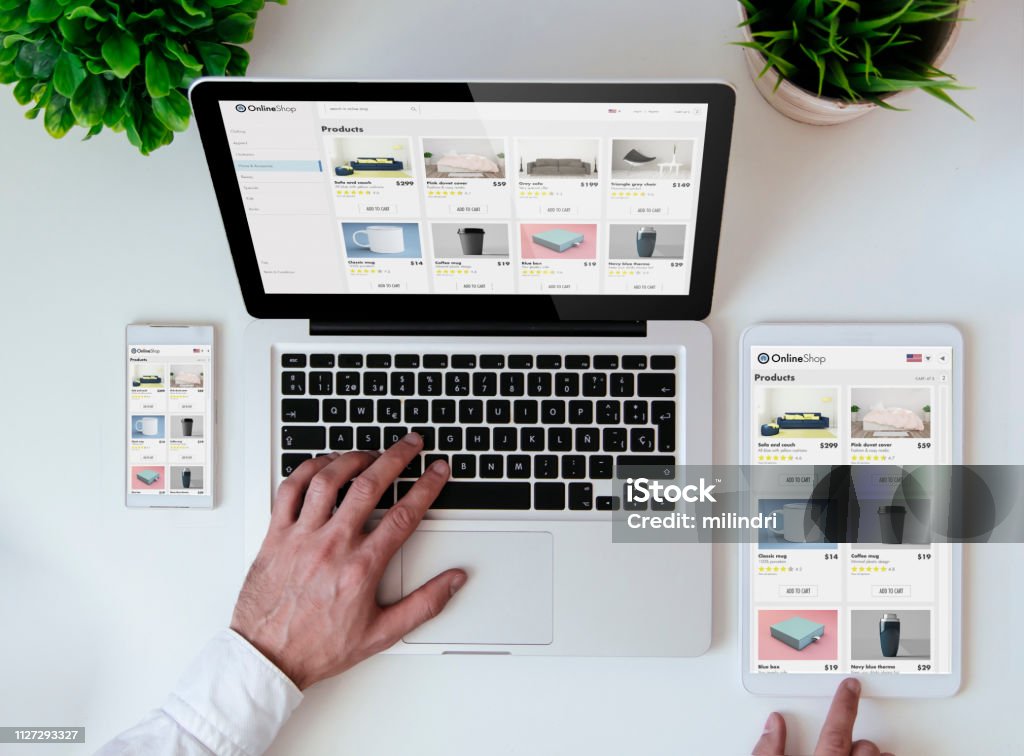
I recently spoke to Zola, a brilliant baker who runs a successful physical shop in Gauteng. She wanted to expand her delicious treats nationwide via ecommerce. She was ready to invest in a premium Ecommerce website design, but she was fixated only on the look and feel. “I have my logo, my colours, and a list of my cakes,” she told me excitedly. “We can start designing, right? I just need a beautiful Online Store.” Check out everything you need to know about ecommerce website design.
Zola’s enthusiasm is infectious, but her approach reveals the single biggest pitfall in starting an ecommerce business in South Africa: prioritising aesthetics over operational mechanics. A beautiful Online Store is just a shop window; if the back-end—the Payments, the Logistics, and the inventory management—is broken, the business will fail quickly, no matter how good the design is. In 2025, successful ecommerce is an exercise in seamless systems integration. Building an Ecommerce website design for an ecommerce operation requires far more preparation than a standard brochure site. You need to have the answers to the operational questions before the first line of code is written. At HAG Web Creations, we’ve compiled the crucial checklist—the five non-negotiable pillars—you must establish before your Online Store project begins.
1. Product Data and Inventory Management Readiness
Before focusing on the Design, you need a complete, structured catalogue of what you are actually selling. This is the bedrock of your ecommerce platform. Check out everything you should know about wordpress website design.
The Content Pipeline for Your Online Store
A common mistake is assuming you can upload product details later. This delays the entire Ecommerce website design process and inevitably leads to errors.
- High-Quality Photography is Non-Negotiable: Every single product demands high-resolution, perfectly consistent imagery. For Zola’s cakes, that translates to clear, professionally well-lit photos captured from multiple essential angles, making sure you include shots of any size variations.
- Structured Product Descriptions: Seriously, do not just copy-paste from an old spreadsheet. Each product requires a clear, persuasive description, prominently bulleted features, accurate pricing (specifying if VAT is included), and the Stock-Keeping Units (SKUs). This level of detail is absolutely vital for both customer trust and successful SEO performance.
- Inventory Synchronization Plan: How will your online store communicate with your physical shop’s stock management system (POS)? If a seamless integration isn’t happening, you need to define the exact manual process for updating stock levels. Defining this crucial process upfront is absolutely essential for smooth Logistics and, critically, for stopping overselling dead in its tracks.
| Data Point | Purpose | Example (for Zola’s Cakes) |
| SKU | Unique inventory tracking code | ZOLA-VELVET-SM |
| High-Res Images | Visual appeal and trust | 3 images (front, side, slice) |
| Weight/Dimensions | Essential for shipping costs | 1.5kg, 20x20x15cm |
2. Payments Gateway Setup and Compliance
That checkout screen? It’s arguably your most critical conversion point—the last hurdle. If your Payments system is confusing, untrustworthy, or simply fails to work, customers won’t just hesitate; they will abandon their carts immediately.

Securing Your Payments Infrastructure: Local Success is Key
Here’s the deal, In the current South African context, offering the right local payment options is absolutely non-negotiable if you want to succeed.
- Choosing the Right Gateway is Crucial: You must integrate a reliable local gateway directly into your e-commerce site design (this is usually done via a plugin like WooCommerce if you’re on WordPress). For dependable service here in South Africa, we highly recommend established options like PayFast, Yoco, or Ozow. You must have your account application approved and your API keys ready before the development phase begins.
- Offering Local Options: While card Payments are standard, local shoppers expect alternative methods. Offering instant EFT via Ozow or even cash-on-delivery (COD) in certain areas of Gauteng significantly increases your conversion rate.
- Compliance: Ensure your Online Store is fully compliant with the Payment Card Industry Data Security Standard (PCI DSS). While your gateway handles most of this, your Design and hosting environment must maintain a secure connection. This is non-negotiable for Risk Mitigation. For more information on payment standards, consult the official documentation provided by the Payment Association of South Africa (PASA).
3. The Logistics and Shipping Strategy
This is the operational engine of ecommerce, and it’s where most local businesses encounter major friction, especially when dealing with national deliveries.
Pre-defining Shipping Rates and Zones
You cannot calculate shipping costs in your Ecommerce website design without pre-defined rules. The Logistics setup is highly complex.
- Shipping Zones and Rates: Define exactly where you will ship (e.g., local Gauteng delivery, major national metros, rest of South Africa). You need a rate matrix: will you charge a flat rate, rate by weight, or rate by cart value?
- Courier Integration: Will you use a fixed courier (like The Courier Guy or Aramex) or a dynamic aggregator (like uAfrica)? The required API setup and testing of the chosen Logistics provider must be done early. Customers hate surprise shipping costs. We’ve seen this happen often where transparent shipping is the difference between a sale and an abandoned cart.
- Packaging and Fulfilment: Have you sourced your packaging (boxes, labels, filler)? Zola’s cakes required specialized, branded cold packaging—a cost and process that had to be factored into the pricing and delivery workflow.
4. Legal Compliance and Policy Pages
Trust is built on transparency, especially in online sales. You need clearly visible legal documentation to protect both the Business Owner and the customer.
Mandatory Legal Pages for Your Online Store
A high-quality Ecommerce website design integrates these pages into the footer and checkout process seamlessly.
- Refund and Returns Policy: This must clearly detail the conditions, timeframes, and procedure for returns in South Africa. Given consumer protection laws, a vague policy is a huge liability.
- Privacy Policy (POPIA Compliant): This document is absolutely essential for adhering to the Protection of Personal Information Act (POPIA). Your policy needs to clearly spell out to the customer exactly what data you are collecting (think names, emails, payment info) and, crucially, how you are protecting it. Expert Tip, For authoritative guidance on achieving full POPIA compliance, your best bet is always to consult the official Information Regulator’s website. Check out the Protection of Personal Information Act (POPIA) now.
- Terms & Conditions: Think of this as the absolutely binding contract between your business and the customer.Your T&Cs must clearly articulate all the rules governing website usage, aggressively limit your company’s liability, and, above all else, definitively establish the step-by-step process for resolving any and all potential disputes.
5. Design, UX, and Content Hierarchy
Only after the foundational operations (Payments and Logistics) are mapped out should you focus on the aesthetic Design and user experience (UX). Look at our Step-by-Step Tutorial: Setting Up Your Ecommerce Website Design
Building for Conversion, Not Just Looks
Your Ecommerce website design must guide the user directly to the checkout button. Design must serve conversion. Look at our website design packages today.
- Content Hierarchy: What is the single most important action on your homepage? (e.g., Shop Now, View Catalogue). The design absolutely must utilize strategic colour and placement to immediately yank the customer’s eye to that crucial action point.
- Colour Psychology & Conversion: You are required to ensure your brand palette is expertly optimized for both readability and accessibility. This is especially vital when choosing the colours for your Call-to-Action (CTA) buttons—you need contrast to make them virtually impossible to miss.(For example, deploying a bright, contrasting colour for the ‘Add to Cart’ button is crucial for visibility.)
- Optimized Checkout Flow: The checkout process needs to be ruthlessly short—ideally, keep it to a single, seamless page. Remember this rule: Every extra field, question, or click represents a painful drop-off point where you lose a sale.A seamless Design integrates the shipping and Payments options clearly at the end.
Final Word: Systems Over Style
Zola paused her Ecommerce website design project, addressed her Logistics strategy, secured her PayFast account, and wrote her POPIA-compliant policies. When the Design phase began, it was fast, efficient, and focused, because the back-end was already solved. Her Online Store launched smoothly, and she was able to focus on baking, not operational fires.
At the end of the day, launching a successful ecommerce operation in South Africa is 80% preparation and 20% execution. You can always refine the Design, but changing your Logistics or Payments gateway mid-stream is costly and disruptive. The work you do upfront—defining the process, securing the Payments, and detailing the product—is what guarantees profitability.
Take that one next step and request a complimentary ecommerce strategy session from HAG Web Creations to audit your Logistics and Payments systems before starting your Ecommerce website design. Look at HAG web creations services today.
Because in the end, the businesses that execute flawlessly are the ones that succeed in ecommerce.